
Materials
Materials
The table below presents the more common materials used by Smalley.
| Material | Material Thickness (in) | Minimum Tensile Strength (psi) | Shear Strength (psi) | Maximum Recommended Operating Temp.4 (°F) | Modulus of Elasticity(psi) |
|---|---|---|---|---|---|
| Carbon Steel | |||||
| Oil Tempered SAE 1070 - 1090 | .006 - .014 | 269,000 | 153,000 | 250 | 30 X 106 |
| .0141 - .021 | 255,000 | 145,000 | |||
| .0211 - .043 | 221,000 | 126,000 | |||
| .0431+ | 211,000 | 120,000 | |||
| Hard Drawn SAE 1060 - 1075 | .006 - .030 | 230,000 | 130,000 | ||
| .0301 - .110 | 181,000 | 103,000 | |||
| .1101 - .220 | 156,000 | 89,000 | |||
| 302 Stainless Steel | |||||
| AMS-5866 | .002 - .022 | 210,000 | 119,000 | 400 | 28 X 106 |
| .0221 - .047 | 200,000 | 114,000 | |||
| .0471 - .062 | 185,000 | 105,000 | |||
| .0621 - .074 | 175,000 | 100,000 | |||
| .0741 - .089 | 165,000 | 94,000 | |||
| .0891+ | 155,000 | 88,000 | |||
| 316 Stainless Steel | |||||
| ASTM A3131 | .002 - .023 | 195,000 | 111,000 | 400 | 28 X 106 |
| .0231 - .048 | 190,000 | 108,000 | |||
| .0481 - .061 | 175,000 | 99,000 | |||
| .0611+ | 170,000 | 97,000 | |||
| 17-7 PH Stainless Steel | |||||
| Condition CH900 AMS-5529 | 240,0002 | 137,0002 | 650 | 29.5 X 10⁶ | |
| A-286 | |||||
| AMS-5810 | 180,0002 | 105,0002 | 1000 | 31 X 106 | |
| INCONEL5 Alloy X-750 | |||||
| Spring Temper AMS-56993 | 220,0002 | 125,0002 | 700 | 31 X 106 | |
| NO. 1 Temper "Rc 35 Maximum" AMS-56991,3 | 136,000 REF | 77,000 | 700 | ||
| NO. 1 Temper AMS-5698 | 155,0002 | 88,0002 | 1000 | ||
| INCONEL5 Alloy 718 | |||||
| AMS-55961 | 180,0002 | 102,0002 | 1300 | 29.6 X 10⁶ | |
| ELGILOY5 | |||||
| AMS-58761,3 | ≤ .004 | 300,0002 | 171,0002 | 800 | 30 X 106 |
| .0041 - .019 | 290,0002 | 165,0002 | |||
| .0191 - .025 | 280,0002 | 159,0002 | |||
| .0251 - .100 | 270,0002 | 154,0002 | |||
| Beryllium Copper | |||||
| Temper TH02 ASTM B1971 | 185,0002 | 128,0002 | 400 | 18.5 X 10⁶ | |
| MP35N® | |||||
| AMS 57581 | 260,000 | 150,000 | 600 | 34.1 X 10⁶ | |
|
NOTE: Additional materials available include Phosphor Bronze, C-276, 410 Stainless Steel, MONEL5 K-500, MONEL5 K-400, Waspaloy and others. Please consult Smalley Engineering for further details. 1 Referenced for chemical composition only. |
|||||
Standard Materials
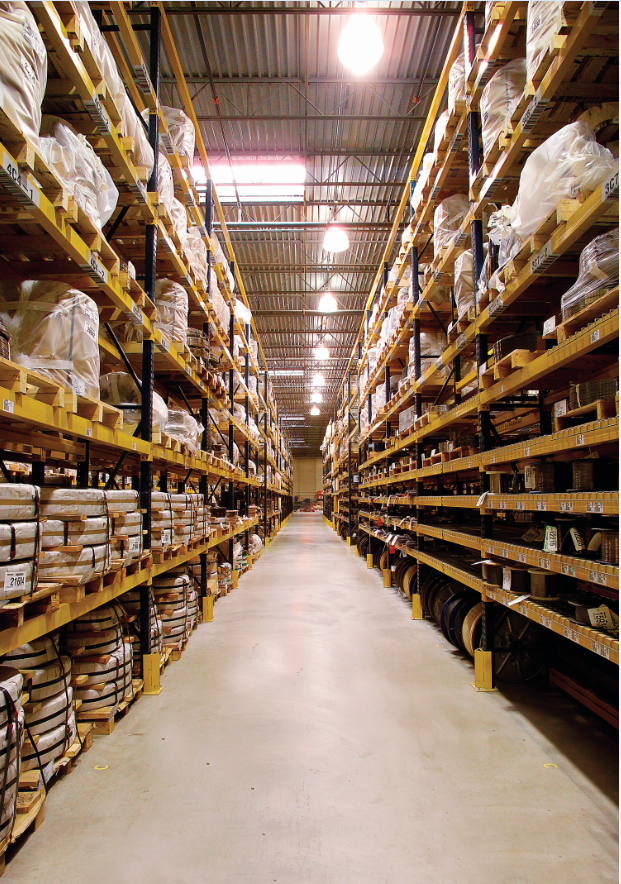
Selecting the proper material for an application requires a general knowledge of what is available. Smalley offers over 40 material options. Specifying the correct material can prevent additional costs and failure in operation.
Smalley Wave Springs and Spirolox Retaining Rings are available from stock in carbon and stainless steel. Wave springs are stocked in both carbon steel and 17-7 stainless. Spirolox Retaining Rings are stocked in carbon steel as well as 302 & 316 stainless steel. Other alloys and finishes are readily available for production.
CARBON STEEL
Smalley offers two standard carbon steel materials for retaining rings and wave springs. Carbon steel is cost-effective and durable, but has low corrosion resistance. It is highly magnetic and can be a variety of colors such as blue, gray, or black. Smalley’s carbon steel products are oil-dipped for protection during shipment and shelf storage.
OIL TEMPERED
SAE 1070-1090 high carbon spring steels are oil tempered and are Smalley’s most commonly used carbon steels. Tensile and yield strength are maximized because of the oil tempered martensitic structure.
HARD DRAWN
SAE 1060-1075 high carbon cold drawn spring steels receive their strength from cold rolling. In either temper, carbon steel is suited for use in a protected environment, as it corrodes if not oiled and sealed from the elements. Additional corrosion protection can be added with custom finishes. Rings and springs are normally supplied with an oil dip finish providing protection during shipment and for shelf storage.
STAINLESS STEEL
Smalley offers three stainless steel materials for retaining rings and wave springs. 302 and 316 are standard materials for retaining rings and 17-7 PH is the standard material for wave springs. Stainless steel, although more costly than carbon steel, is more corrosion resistant and able to withstand higher temperature limits. It is slightly magnetic and can be a variety of colors such as blue, brown, and silver. Smalley’s stainless steel products usually undergo ultrasonic cleaning and vapor degrease finishing processes.
302 STAINLESS STEEL
302 is specified because of its combination of corrosion resistance and physical properties. 302 stainless steel gains spring temper condition by cold working. Although it is categorized as a nonmagnetic stainless, 302 becomes slightly magnetic because of the cold working. It cannot be hardened by heat treatment.
- 302 has a silver-gray color.
316 STAINLESS STEEL
316 is nearly identical in physical properties and heat resistance to 302. It provides more corrosion resistance because of the addition of molybdenum, particularly against pitting. As with 302, the magnetism of 316 increases as the wire is cold reduced. It cannot be hardened by heat treatment. 316 is generally used in food, chemical and sea water applications.
- 316 has a silver-gray color.
17-7 PH CONDITION CH900 STAINLESS STEEL
17-7 PH Condition CH900 is similar in corrosion resistance to 302 and offers both high tensile and yield strength. In fatigue and high stress applications, 17-7 outperforms even the finest grade of carbon steel. Spring properties are achieved by precipitation hardening Condition C to Condition CH900. As a result, the material may be subjected to a temperature of 650˚ F without a loss of spring properties. Its magnetism is similar to carbon steel.
- 17-7 has a blue, brown, or silver color; atmosphere-controlled heat treatment provides a brighter color.
-
HELPFUL LINKS

- Contact a Smalley Engineer to determine the best material for your application
- View Materials Table for more specifications on our common materials
- Read Blog: How to Control Corrosion: Material Selection for Rings and Springs
- Read EBook: Material Selection Guide
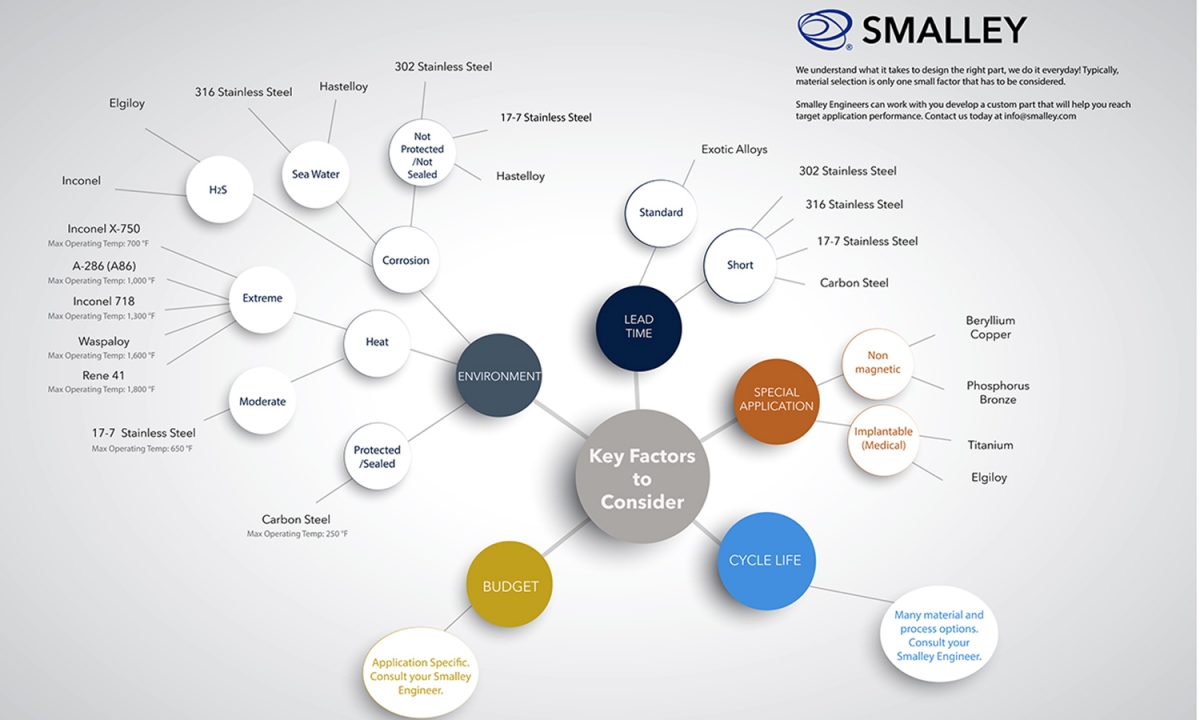
INFOGRAPHIC: KEY FACTORS TO CONSIDER WHEN SELECTING RING AND SPRING MATERIAL
Non-Standard Materials
OVER 40 CUSTOM MATERIALS FOR WAVE SPRINGS AND RETAINING RINGS
SUPER ALLOY
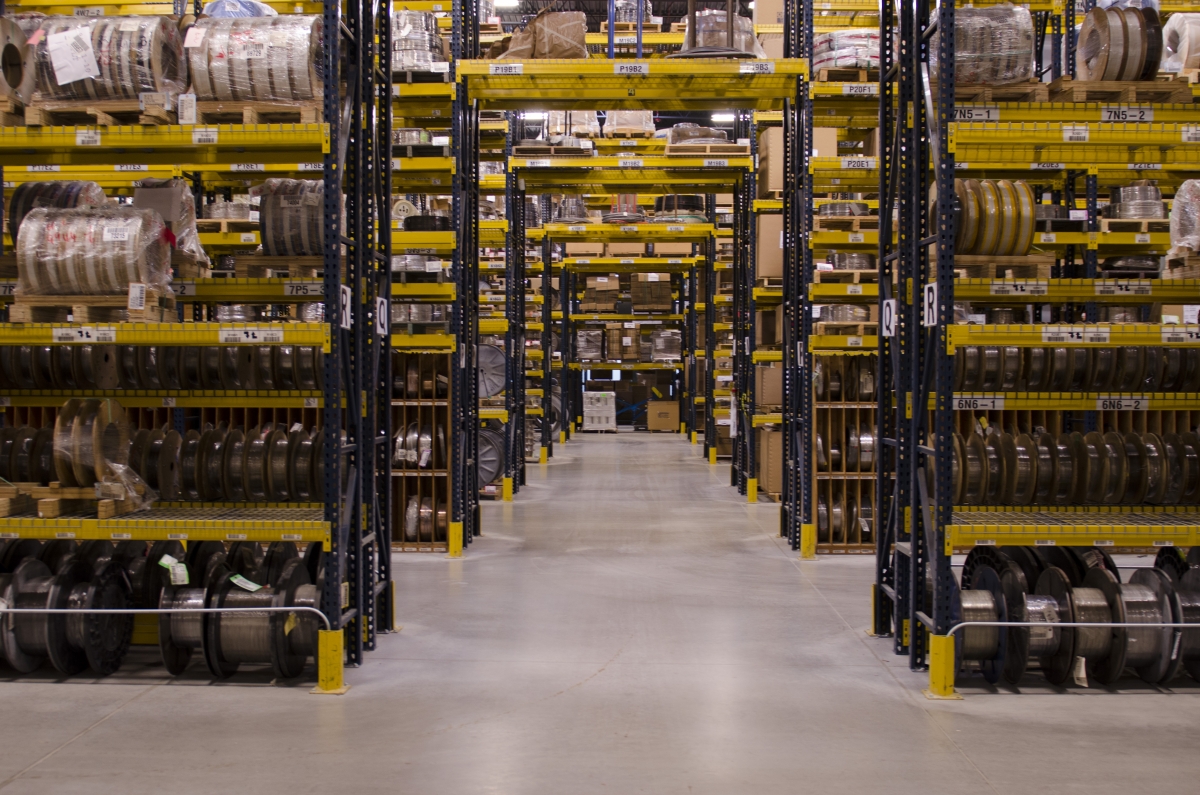
Smalley offers super alloys when carbon and stainless steels do not meet an application's unique requirements. Super alloys maintain material properties in extreme operating conditions. These materials exhibit no magnetism and can be blue, brown, or silver in color.
Materials may be heat treated in open-air or in an atmosphere-controlled furnace. Open-air heat treatment may produce scale, which often results in a dark residue. An atmosphere-controlled environment eliminates scale and produces a part with a brighter finish.
INCONEL®1 X-750
Inconel X-750 is a nickel-chromium alloy and precipitation heat treated to a spring temper condition. In this state, it has temperature resistance up to 700˚ F. Additional temper methods are available to achieve slightly different physical properties. Smalley also offers NACE (The National Association of Corrosion Engineers) approved materials to meet your requirements. This nickel-chromium alloy is used most commonly in high temperature and corrosive environments. Two commonly specified tempers of Inconel are described below.
- Rings and springs manufactured from this grade of Inconel have a blue/silver-gray color and exhibit no magnetism.
A286 ALLOY
A286 is a nickel-iron-based alloy that exhibits similar properties to Inconel X-750, but with additional heat resistance of up to 1000˚ F. Its spring temper condition is obtained by precipitation hardening.
- This material exhibits no magnetism and has a blue/silver-gray color.
ELGILOY®2
Elgiloy is a cobalt-based alloy known for its high strength and excellent corrosion resistance. It can be used in environments up to 800˚ F. Elgiloy shows improved resistance to sulfide stress cracking over other NACE-approved materials.
- Elgiloy exhibits no magnetism and is blue-brown in color as a result of heat treatment.
MP35N®3
MP35N is a nickel-cobalt-based alloy known for its high strength and corrosion resistance. It can be used in environments up to 600˚ F. It is often specified for oil and gas applications.
HASTELLOY® C-276
Commonly used in chemical processing industries, Hastelloy C-276 is a nickel-based alloy with proven performance in corrosive applications. Similar to other nickel-based alloys, it is ductile, easy to form, and has excellent resistance to stress corrosion cracking in chloride solutions. It can be used in environments up to 750˚F.
MONEL®1 K-500
Monel K-500 is a nickel-copper-based alloy known for its excellent corrosion resistance, strength, and hardness properties. It can be used in environments up to 550˚ F.
1 INCONEL X-750 and MONEL are registered trademarks of Special Metals Corporation.
2 ELGILOY is a registered trademark of Combined Metals of Chicago.
3 MP35N is a registered trademark of SPS Technologies Inc.
4 HASTELLOY is a registered trademark of Haynes International.
COPPER
When magnetism or conductivity is important to your application, Smalley offers a range of copper materials as a custom material option.
BERYLLIUM COPPER ALLOY # 25
Beryllium copper is nonmagnetic and one of the most electrically conductive materials offered by Smalley. Normally specified in a hard temper, it has a combination of low modulus of elasticity and high ultimate tensile strength. The alloy gains its physical properties by precipitation hardening. In contrast to other copper alloys, beryllium copper has the highest strength and is suitable to use at temperatures up to 400˚ F.
PHOSPHOR BRONZE, GRADE A
Phosphor bronze is a nonmagnetic alloy with fair electrical conductivity. It is purchased in a spring temper condition to maximize spring characteristics and can be hardened only by cold working. Phosphor bronze exhibits fair spring properties and is rated a step below beryllium copper in performance.
ADDITIONAL MATERIALS
In addition to the materials listed above, Smalley offers 410 Stainless Steel, Waspaloy, and others. If you have questions about these materials or do not see your desired material listed, please contact Smalley Engineering for more information.
HELPFUL LINKS
- Contact a Smalley Engineer to determine the best material for your application
- View Materials Table for more specifications on our common materials
- Read Blog: How to Control Corrosion: Material Selection for Rings and Springs
- Read EBook: Material Selection Guide
INFOGRAPHIC: KEY FACTORS TO CONSIDER WHEN SELECTING RING AND SPRING MATERIAL
Material Finishes
FINISHES, PLATINGS, AND COATINGS FOR WAVE SPRINGS AND RETAINING RINGS
After selecting the appropriate material for your application, adding a finish, plating or coating may be necessary to meet your application requirements. These additional processes can improve the function, look, and performance of the part.
BLACK OXIDE
MIL-DTL-13924, Class 1This finish provides a flat black appearance that is generally used to alter cosmetic appearance instead of an improvement in corrosion resistance.
CADMIUM PLATING
Cadmium Plate, AMS-QQ-P-416, Class 2, Type I
Cadmium Plate w/Chromate Dip, AMS-QQ-P-416, Class 2, Type II
Cadmium plating is used on carbon steel to increase the corrosion resistance of the product. The process of cadmium plating spiral retaining rings is costly and subjects the ring to the possibility of hydrogen embrittlement. Smalley offers stainless steel as the preferable option to cadmium.
OIL DIP
This is the standard finish for all Smalley products produced from carbon steel. The oil provides resistance to corrosion in transport and normal storage. The oil dip finish should not be considered a permanent finish.
PASSIVATION
AMS 2700, Method 1, Type 2, Class 3
Passivation is an optional cleaning operation for stainless steel. It provides a bright finish and increased corrosion resistance. Passivation dissolves iron particles and other substances, which have become embedded in the surface of stainless steel during production. If not dissolved, these foreign particles could promote rusting, discoloration or even pitting.
The corrosion resistance of stainless steel is due to the thin, invisible oxide film that completely covers the surface of the ring and prevents further oxidation. Removing the contaminates prevents breaks in the oxide film for optimum corrosion resistance.
VAPOR DEGREASE / ULTRA SONIC CLEAN
This is the standard cleaning and finish for all products manufactured in stainless steel. The process removes oil and other organic compounds from the material surface by use of a degreasing solvent, which is forced between the turns of the part with ultrasonic waves.
VIBRATORY DEBURR / HAND DEBURR
Although all circumferential surfaces and edges of Smalley products are smooth, sharp corners can be present on the gap ends due to the cut-off operation. To break the sharp corners and achieve a smooth surface finish, parts may be either vibratory or hand deburred to meet your specifications.
ZINC PHOSPHATE
MIL-DTL-16232, Type Z, Class 2
This finish is sometimes referred to as “Parkerizing” and appears gray-black in color. The corrosion resistance of phosphate is superior to black oxide but inferior to cadmium plating or stainless steel. Phosphate cannot be applied to stainless steel.
ZINC PLATING
Zinc Plate, ASTM B633, Type V, Fe/Zn 5, SC1 (Colorless)
Zinc Plate, ASTM B633, Type VI, Fe/Zn 5, SC1 (Colored Passivate)
Zinc plating is used on carbon steel to increase the corrosion resistance of the product. It is sometimes used as a more cost-effective alternative to other plating options or stainless steel. Smalley’s standard
zinc platings, Type V and Type VI, are RoHS compliant. The thickness level of the plating is controlled by the service condition number (SC Number), which should be designated by the customer. Zinc plating does not guarantee coverage between the turns of multiple turn rings and springs. (The process does subject the part to the possibility of hydrogen embrittlement. We offer stainless steel as a preferable alternative.)
HELPFUL LINKS
- Contact a Smalley Engineer to determine the best material for your application
- View Materials Table for more specifications on our common materials
- Read Blog: How to Control Corrosion: Material Selection for Rings and Springs
- Read EBook: Material Selection Guide